
Learn how to make miso soup at home! Brimming with savory, umami flavor, this easy recipe is a delicious side dish, starter, or meal on its own.
Jump to Recipe


Raise your hand if you love miso soup! Same. The cloudy broth is warming, nourishing, and deeply flavorful. On a cold, gray winter day, there’s nothing I crave more. It clears my head and warms me up from the inside out.
For years, I only ate miso soup at Japanese restaurants. But after Jack and I traveled to Japan for the first time, we got curious about Japanese cooking at home. We cooked soba noodles, we made matcha, and we decided to try a miso soup recipe. I don’t know what I was expecting, but I certainly didn’t imagine the process to be so simple. We had steaming bowls of miso soup on the table in under 20 minutes!
Now, this miso soup recipe is a staple in our house. It has a rich, savory, umami flavor, and it’s brimming with chewy seaweed, crisp scallions, and soft tofu. Serve it as a starter or a side dish with your favorite Japanese food, or enjoy it as a meal on its own.

What is miso soup?
Miso soup is a traditional Japanese soup. Its base is dashi, an umami stock that’s typically made with a mix of dried bonito flakes and dried kombu kelp. The soup is then flavored with miso, or fermented soybean paste.
Numerous varieties of miso soup are made throughout Japan. They might feature different types of miso paste, such as red miso, yellow miso, or the shiro miso I call for here, or include meat or vegetables like shiitake mushrooms or daikon radish. This recipe is a riff on the simple miso soup offered at many Japanese American restaurants.
Miso Soup Ingredients
The key ingredient in this recipe is miso paste.
Choosing miso paste for miso soup
I recommend making this recipe with white miso, also called shiro miso. It’s fermented for less time than darker types of miso, such as red miso, and has a milder, sweeter flavor that works well with this miso to dashi ratio. Find it in the refrigerated section of Asian markets and most grocery stores.
Here’s what else you’ll need to make this recipe:
- Kombu – For flavoring the dashi. In traditional miso soup, dried bonito flakes would also season the soup stock, but I skip them to keep my recipe vegetarian. The dashi is still plenty flavorful without them! Look for dried kombu in Asian markets, the Asian section of your grocery store, or online.
- Silken tofu – I like to use extra-firm tofu when I’m baking tofu, but in this miso soup recipe, silken tofu is a must. With its super-smooth texture, it practically melts into the savory soup.
- Wakame – Find this dried seaweed in an Asian market, the Asian section of your grocery store, or online. 3 tablespoons might not seem like much for a whole pot of soup, but don’t be deceived. Soak the dried wakame in a little warm water, and it’ll expand like crazy!
- Green onions – They add a nice crunch and sweet, oniony flavor to the soup.
- Tamari – For serving! Add a drop at a time until your soup has a well-balanced savory flavor.
Find the complete recipe with measurements below.

How to Make Miso Soup
This miso soup recipe is super simple to make! Here’s what you need to do:
Step 1: Make the dashi.
Rinse the kombu, place it in a medium pot with the water, and gently simmer over low heat. Careful not to let it boil! If you do, the kombu flavor will become bitter. After 10 minutes, remove and discard the kombu.

Step 2: Rehydrate the wakame.
Place it in a medium bowl, and cover it with warm water. Set it aside for 5 minutes. You won’t believe how much it grows!
Step 3: Add the miso paste.
When the dashi is ready, you can add the miso paste.
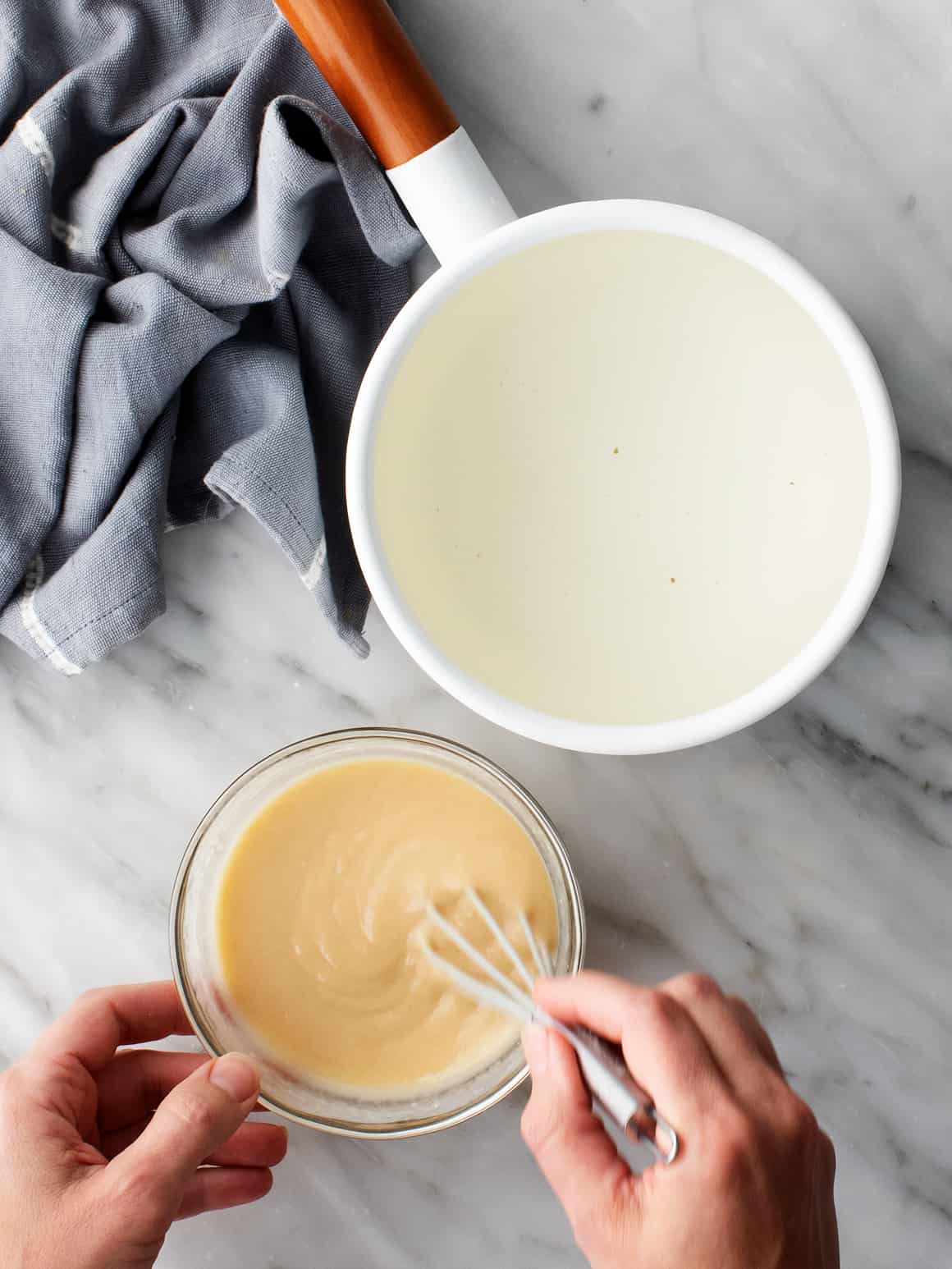
The best way to do this is by making a miso slurry. Ladle some of the hot dashi into a small bowl, add the miso paste, and whisk until smooth.

Then, stir the miso mixture into the remaining dashi.
Why make the miso slurry? It loosens the miso paste so that it incorporates evenly with the dashi. Were you to add the paste straight to the pot, your soup would be lumpy.
Step 4: Add the tofu, green onions, and wakame.
Drain the wakame and add it to the soup, along with the green onions and tofu. Simmer the soup over very low heat for 1 to 2 minutes, just to warm it through.
When the soup is warm, enjoy! I like to serve it with tamari to taste.
Tip
Don’t bring the soup to a boil! Because miso is a fermented food, it’s teeming with probiotics. Boiling miso kills these beneficial bacteria, so you’ll miss out on some of its health benefits.

Miso Soup Serving Suggestions
Serve this miso soup recipe as a starter, side dish, or meal on its own. When I’m eating it as a main dish, I serve it with cooked rice or soba noodles. If I want to make the soup even heartier, I add extra veggies. Japanese turnips, shiitake mushrooms, radishes, carrots, kabocha squash, and greens like spinach or bok choy all work well here. Add them to the dashi and simmer until tender before stirring in the miso slurry.
If I’m serving this miso soup as a starter or side dish, I pair it with other Japanese-inspired recipes like tamago kake gohan or okonomiyaki. Jack and I also love eating it with vegan sushi, shiitake maki, or avocado mango sushi.

More Favorite Miso Recipes
I hope you love this miso soup recipe! After you make it, try using miso in other ways in your kitchen. It adds savory, umami flavor to all of these dishes:
- Vegan Ramen
- Adzuki Bean Bowls
- Wild Rice Soup
- Oyster Mushroom Soup
- Cauliflower Soup
- Sesame Noodle Bowl

Miso Soup
Ingredients
- 1 (3-inch) piece kombu
- 4 cups water
- 3 tablespoons wakame dried seaweed
- ¼ cup white miso paste
- ⅓ cup chopped green onion
- 6 ounces silken tofu, cubed
- Tamari, to taste
Instructions
- Gently rinse the kombu piece. Place it in a medium pot with the water and gently simmer for 10 minutes. Don’t let it boil, or the kombu flavor will turn bitter.
- Soak the wakame in a small bowl of warm water for at least 5 minutes to rehydrate.
- Remove the kombu from the soup. In a small bowl, stir the miso paste together with some of the hot broth until the mixture is smooth, then stir it back into the soup.
- Drain the wakame and add it to the soup pot along with the green onions and tofu. Simmer over very low heat for 1 to 2 minutes. Season to taste with tamari and serve.











Hi Jeanine! Thanks for this beautifully simple recipe. I really appreciate the tip about not boiling the miso to preserve its beneficial probiotics. The slurry method is genius for a smooth, nourishing bowl. Absolutely loved it!
I’m glad you enjoyed it!
Can I use firm tofu instead of silken tofu?
Hi Kara, yep! You can.
A great reminder to never boil the miso! Making a slurry ensures such a smooth texture, and using shiro miso keeps the flavor beautifully delicate and restorative. A perfect, simple recipe for a nourishing bowl.
The flavor was fine according to the miso soup lovers but there was too many ingredients floating in it. They are used to mostly brought with a tiny bit of add ins. They don’t want me to make this again.
So so good and so comes together so quickly! I added bonito flakes (.5 oz) for even more flavor. Simmer the kombu for 5 minutes and add the bonito off heat, let steep for another 5 minutes. I will be making this again but I’ll cut the wakame and tofu amounts in half. Love it!
Good base recipe. I added a bonito flake broth (1/2 cup of bonito flakes gently simmered for 3-4 minutes then stained) to the dashi and added a little hacho miso to create more of an authentic taste.
LOVE IT! 🥰 works very well and very easy to make: five stars!
I just made this–it was perfect. My only changes were I added chopped bok choy and thinly sliced mushrooms and a small drizzle of sesame oil.
Sounds delicious, Arlene! So glad you enjoyed it.
Please don’t rinse the kombu! That white powder compound known as mannitol is the key contributor to umami
Made this today and it was so easy and excellent!
Excellent recipe
So glad you enjoyed it!
The soup is really delicious and easy to make. I made it while I was unwell, and I still had the energy to do it. I added bok choy and carrots to make it a little hardier for a meal.
Hi Chris, I’m so glad you enjoyed the miso soup!
This recipe is absolutely delicious!! Thank you for sharing.
This was good but I wonder if it would be better to put the wakame in at the beginning and let it rehydrate alongside the kombu. That way you don’t have to discard any yummy nutrient-dense water and it also might soften the wakame more. Thoughts?
Hi Stephanie, I think that would work well!
This soup is amazing. I added mushrooms.
I’m so glad you loved it!
I did too! And a few soy beans. Delish!
Me too! I couldn’t find the wakame at my local Asian market but adding mushrooms perked things up.
does anyone know how many calories at in one serving
1.5 oz of silken tofu have about 30 kcal, and one TBS of miso paste has about 35. The wakame and spring onions hardly have any, so one serving comes out to about 70 kcal.
I learned how to make this in Japan, and you pretty much have re-created the traditional way I learned, with one exception. You don’t include Katsuoboshi (dried bonito flakes). This should be added to the dashi after the kombu is done and then strained out with the kombu. For the person who didn’t find it salty enough, the bonito will definitely add salt.
Hi Susan, definitely! I omitted it here only because this is a vegetarian blog.
What is the best way to store the leftovers and for how long. Thanks
Hi Eva, I store the leftovers in the fridge in a glass container and reheat on the stove (or in the microwave). It’ll last 4 to 5 days.
Can it be frozen? Can you freeze tofu?
hmmm… I haven’t frozen miso soup before so I’m not sure. I think it would be fine? The tofu would be fine, I’m not sure how the seaweed freezes.
Made this tonight subbing in dashi packet and mushroom soy sauce for the kombu and tamari. I also added some sliced white mushrooms for more substance as this is my main meal for dinner. Delish! Takk fra Norge.
I was feeling a bit under the weather and was looking for a savory brothy soup when I found this one. I always start at Love and Lemons for my recipes! The soup was super easy to make once I had the ingredients which were also easy to find at the store. And it was delicious and completely hit the spot. It could be my imagination, but I am feeling better already. Thank you for all these wonderful recipes.
Hi Linda, I’m so glad you loved it! Feel better!
This was so good and so easy to make! Thank you for sharing 🙂